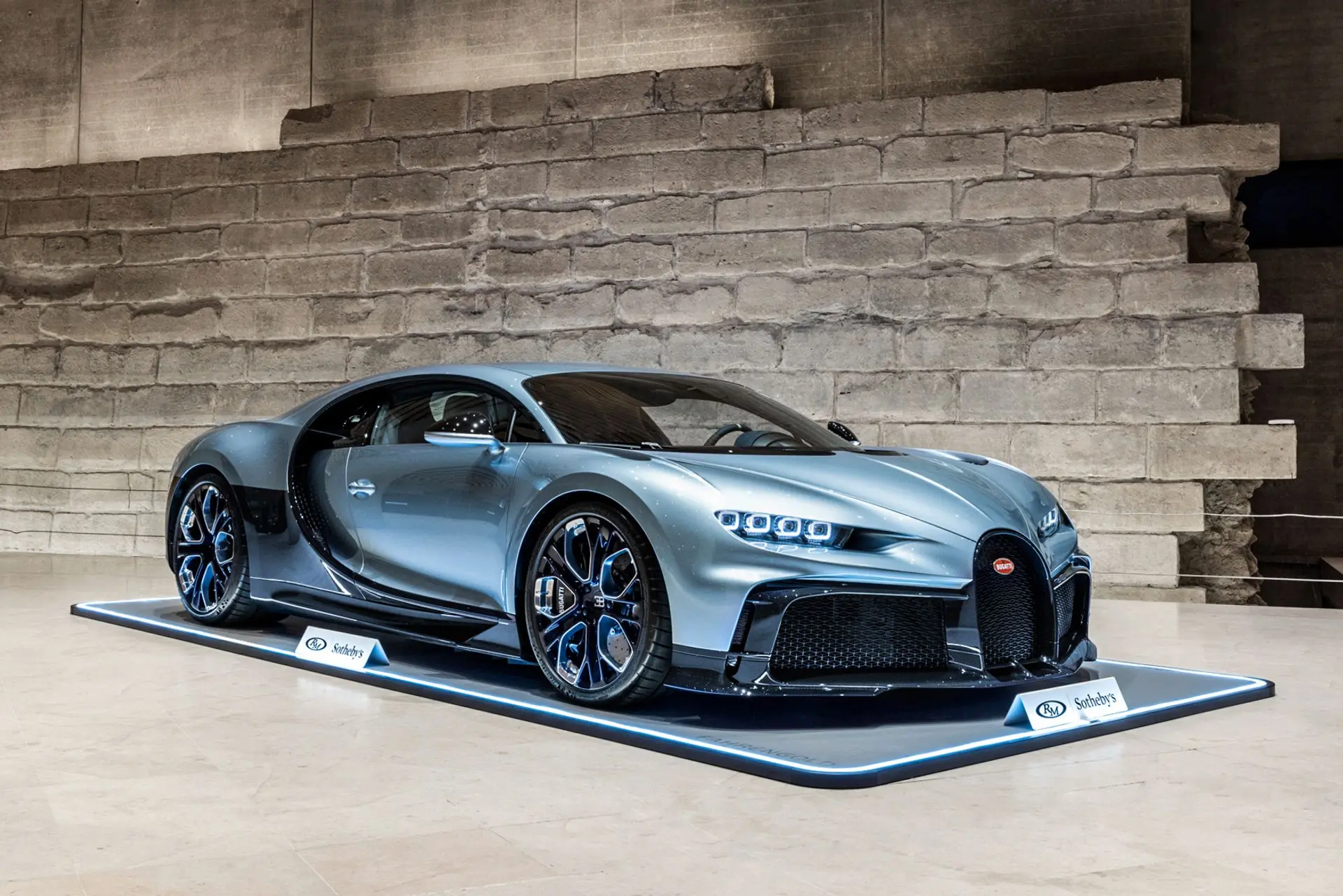
A new exclusive report claims future Bugatti hypercars could be manufactured at Rimac’s state-of-the-art campus in Sveta Nedelja, Croatia — shifting production from Molsheim, France, as the Bugatti Rimac joint venture deepens integration ahead of a new generation of hybrid and electric hypercars.
One of the most consequential — and potentially controversial — shifts in the hypercar world has emerged from an exclusive report: future Bugatti models may be manufactured in Croatia at the Rimac Campus in Sveta Nedelja, near Zagreb, rather than continuing production at the historic Bugatti atelier in Molsheim, Alsace, France. The report suggests that the operational and engineering integration between Bugatti and Rimac — partners in the Bugatti Rimac joint venture since 2021, with Rimac holding a 55% majority stake — is progressing toward manufacturing consolidation at Rimac’s world-class facility.
The Rimac Campus: A Facility Built for Hypercars
The argument for Croatian manufacturing becomes more comprehensible when the Rimac Campus is understood in context. Completed in its first phase in October 2024, the Rimac Campus in Sveta Nedelja is one of the most technologically advanced automotive manufacturing and engineering facilities in the world:
- Manufacturing space: Over 100,000 square meters of production, engineering, and testing infrastructure
- Rimac Nevera production: Currently producing the world’s most powerful production electric car, demonstrating ultra-high-precision low-volume manufacturing capability
- Engineering centers: Advanced battery development, electric powertrain engineering, vehicle dynamics, and software development — all co-located on a single campus
- Testing infrastructure: Indoor and outdoor vehicle dynamics testing, component test benches, and dedicated battery abuse simulation labs
- Workforce: Over 3,000 engineers, technicians, and production specialists
This is not a conventional automotive factory. The Rimac Campus was specifically designed for the development and production of the world’s most technically ambitious electric vehicles — making it potentially the most appropriate manufacturing environment for Bugatti’s next generation of electric and hybrid hypercars.
Strategic Logic: Why the Move Makes Sense
The Bugatti Rimac joint venture was structured from the outset as more than a financial arrangement. The Bugatti Tourbillon — revealed in 2024 as the Chiron’s successor — uses a Rimac-derived electric powertrain as the core of its hybrid system, combining a 1,000 hp electric component with a new naturally aspirated V16 engine.
The logical evolution of this technical integration is manufacturing consolidation. Building future Bugatti models on the same campus where the electric and hybrid powertrain components are engineered and tested would:
- Reduce development cycle time — eliminating logistics overhead between Croatia and France
- Improve quality control — tighter integration between assembly teams and powertrain engineers
- Enable faster iteration — software-defined hypercar development benefits enormously from geographic proximity between software and vehicle teams
The Molsheim Question: Heritage vs. Efficiency
The most sensitive aspect of any Croatian manufacturing shift is the Bugatti Atelier in Molsheim — the historic facility where every Bugatti since the Veyron has been hand-assembled. Molsheim is not merely a factory: it is the physical embodiment of Bugatti’s French heritage, dating back to Ettore Bugatti’s original choice of the Alsatian location in 1909.
The report does not clarify whether a Croatian manufacturing move would replaceMolsheim entirely or supplement it with a model-specific split. A complete Molsheim retirement seems commercially and reputationally unlikely — it would be a brand heritage decision requiring public justification that would be extremely difficult to deliver without significant buyer and press backlash.
The most probable outcome, from what industry logic suggests, is that the Molsheim atelier continues to assemble bespoke combustion-heritage models and serve as a customer experience and personalization center, while new platform models — particularly any future full-electric Bugatti — are produced at Rimac Campus where the enabling technology is physically located.
US Market Implications
Bugatti sells in extremely limited numbers in the United States — the Chiron family was priced from approximately $3.3 million — but American buyers represent a meaningful share of global hypercar demand. A Croatian manufacturing origin for future models would be commercially neutral in functional terms — Rimac already builds the Nevera (priced at $2.4 million) at the same campus — but requires careful brand communication to manage heritage implications for ultra-high-net-worth buyers who associate Bugatti’s French provenance with its luxury positioning.
The next confirmed Bugatti product is the Tourbillon — currently in early customer delivery — using a 1,600+ hp hybrid system. Whether subsequent models use Croatian manufacturing will likely be confirmed alongside their unveiling, expected in the late 2020s. For broader context on the ultra-luxury SUV and performance vehicle landscape available to US buyers today, our SUVs over $100,000 guide covers the relevant competitive tier.
FAQ
Why might Bugatti move production to Croatia?
The Rimac Campus houses Bugatti Rimac’s primary electric powertrain engineering and production capability — consolidating vehicle assembly there would reduce development time and leverage world-class EV manufacturing infrastructure.
Would Bugatti’s Molsheim factory close?
Not confirmed. The most likely scenario is a model-specific split — Molsheim continuing for heritage and bespoke models, Croatia handling new electric or hybrid platforms.
Who owns Bugatti Rimac?
Rimac Group holds a 55% majority stake; Porsche SE holds the remaining 45%. Mate Rimac serves as CEO.
What is the Rimac Campus?
A 100,000+ square meter automotive engineering and manufacturing facility in Sveta Nedelja, Croatia — completed in 2024, currently producing the Rimac Nevera, hosting over 3,000 specialists.
What is the next Bugatti model?
The Bugatti Tourbillon — a 1,600+ hp hybrid hypercar combining a new naturally aspirated V16 with Rimac electric motors — currently in early customer delivery phase.
Is this confirmed by Bugatti or Rimac?
No. The report is an exclusive scoop and has not been officially confirmed by Bugatti Rimac, Rimac Group, or Porsche.
Conclusion
The possibility of Bugatti production moving to Croatia is simultaneously surprising and, on reflection, entirely logical. The Rimac Campus is arguably the most capable facility in the world for building software-defined, electrically dominant hypercars. Managing the Molsheim heritage implications sensitively will be the critical communication challenge — but if executed thoughtfully, a Croatian-built electric Bugatti need not diminish the brand’s extraordinary legacy. It may write an equally extraordinary new chapter of it.