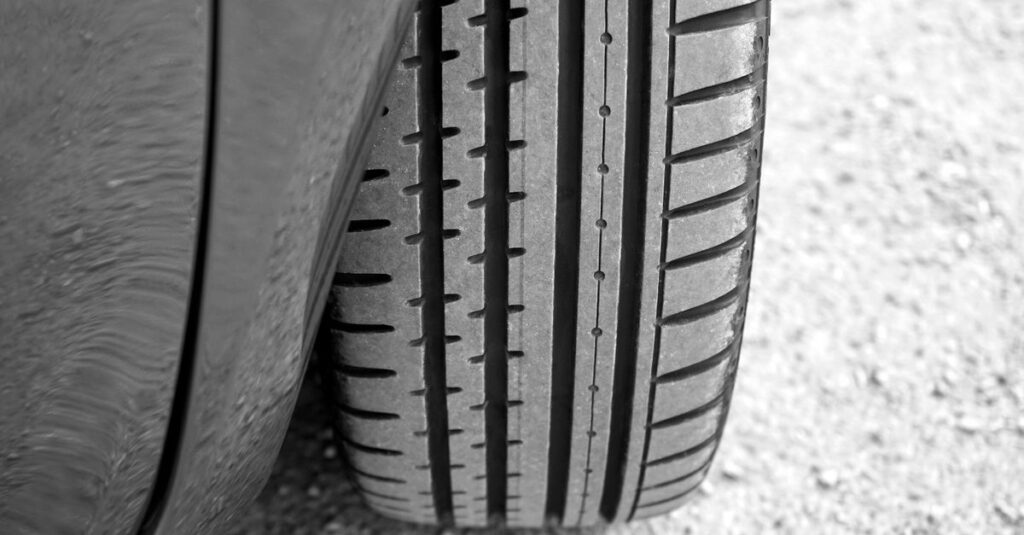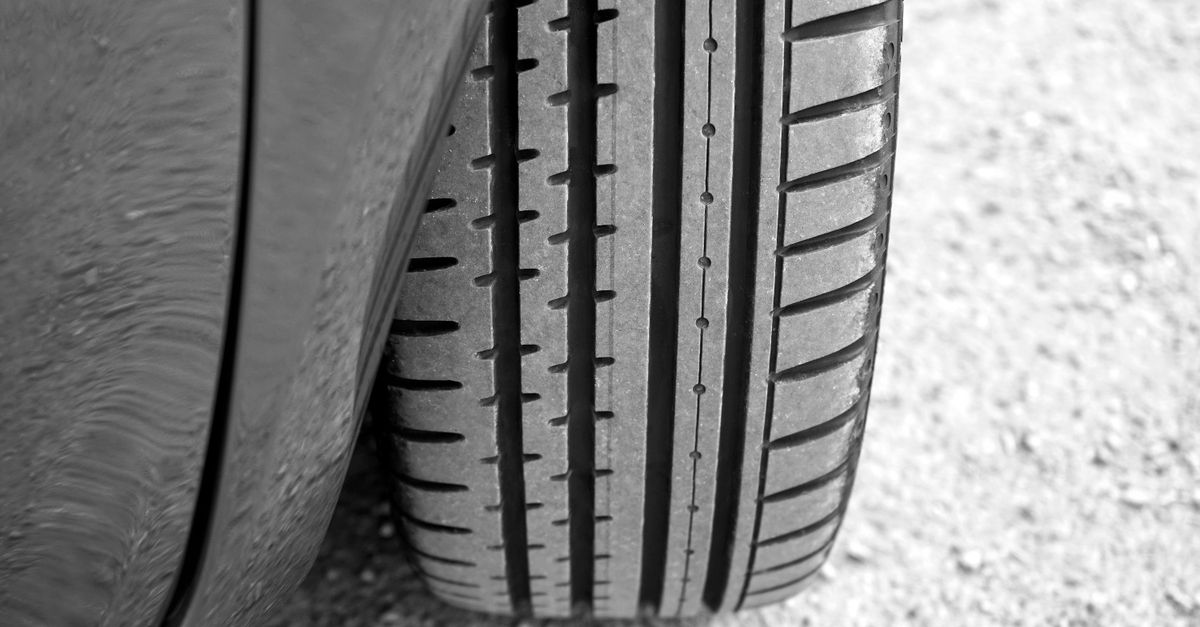
Uneven tread wear is more than an appearance issue. The location and shape of the wear can help narrow what a driver or technician should inspect—such as tire pressure, alignment, balance, wheels, steering or suspension—but it cannot identify a failed part by itself. That makes a worn tire a maintenance clue, not just a replacement expense.
What the guidance supports
The U.S. Tire Manufacturers Association’s Tire Care and Safety Guide associates abnormal or uneven wear with wheel misalignment, improper inflation, skipped rotations, wheel imbalance, damaged wheels, worn shocks or struts, and loose steering or suspension components. Several of those conditions can produce similar-looking wear, so replacing a tire or scheduling an alignment without checking the rest of the vehicle may leave the underlying problem unresolved.
The USTMA guide to passenger and light-truck tire care also explains that regular rotation helps equalize wear and extend tread life. Rotation is not a cure for a damaged component, but a skipped-rotation history is relevant when a tire is wearing unevenly.
How to read common wear patterns
These patterns are clues, not diagnoses:
Wear on one shoulder or one side of the tread: This may indicate an alignment or camber problem. The National Congress on School Transportation manual identifies one-sided shoulder wear as an alignment-related clue. The next step should be an alignment measurement along with an inspection for damaged or worn components.
Feathered tread edges: Feathering is commonly associated with an incorrect toe setting, according to the same manual. Because toe is part of the wheel-alignment geometry, the vehicle should be measured rather than adjusted based only on a visual guess.
Wear on both shoulders: The USTMA tire-care material identifies this pattern as a possible sign of chronic underinflation. Check the pressure against the vehicle manufacturer’s recommended setting and have the tire and wheel checked if the pressure does not remain consistent.
Wear concentrated in the center: This can point to chronic overinflation. Confirm the actual pressure and compare it with the vehicle’s specified setting instead of relying on the number molded into the tire’s sidewall.
Cupping or scalloped wear: An HMA tire-maintenance technical bulletin available through NHTSA’s public TSB archive says this pattern may result from worn suspension components, tire imbalance or alignment outside specification. It calls for inspecting the affected areas rather than assuming an alignment alone will correct the problem.
Patchy or otherwise irregular wear: The USTMA guidance also lists skipped rotations, imbalance, damaged wheels, worn shocks or struts, and loose steering or suspension components among possible contributors. A pattern that does not fit one simple category is a reason for a broader inspection, not a reason to guess at a replacement part.
Why an alignment may not be the whole repair
An alignment adjusts wheel geometry; it does not automatically correct a bent wheel, an imbalance or a worn suspension component. That distinction matters most with cupping and scalloping. If a shop finds that the alignment is outside specification, the technician should still determine whether the parts holding the wheel in position are sound before treating the alignment as the complete repair.
The same caution applies to a tire that has already developed pronounced uneven wear. Correcting pressure or alignment can address the cause, but it cannot restore tread that has already been worn away. Ask the technician whether the existing tire remains suitable after the underlying condition is corrected.
A practical inspection sequence
- Check the pressure. Measure the road tires and compare the readings with the vehicle manufacturer’s recommended settings. Uneven pressure can create a pattern that resembles a more complicated fault.
- Describe the pattern. Note whether wear is on one shoulder, both shoulders, the center, or in scalloped or feathered sections. Look at each road tire rather than assuming the most visibly worn tire is the only one affected.
- Review rotation and balance history. Regular rotation can help equalize normal wear, while skipped rotations or an imbalance can contribute to irregular wear.
- Request a complete inspection. When wear is abnormal, ask the shop to check alignment, wheel and tire balance, wheel condition, steering components and suspension—not just to install a tire or print an alignment report.
- Reassess before driving normally. If the tire or wheel has visible damage, the wear is severe or rapidly worsening, or the vehicle has vibration, pulling or loose steering, consult a qualified technician before treating the issue as a routine alignment visit.
What it means for used-car shoppers
Unevenly worn tires do not prove that a seller neglected maintenance or that the vehicle needs an expensive repair. They do justify a closer inspection. A pre-purchase inspection should document the wear pattern and check alignment, balance, wheels, steering and suspension. Service records can also show whether tire pressure checks and rotations were performed regularly.
Bottom line
Tire wear can point a diagnosis in a useful direction: shoulder wear may suggest pressure or alignment concerns, feathering may point toward toe, center wear may indicate overinflation, and cupping may require a broader suspension and balance inspection. None of those patterns proves a specific fault. Treat the tread as an early warning, then verify the cause before choosing an alignment, suspension repair or replacement tire.