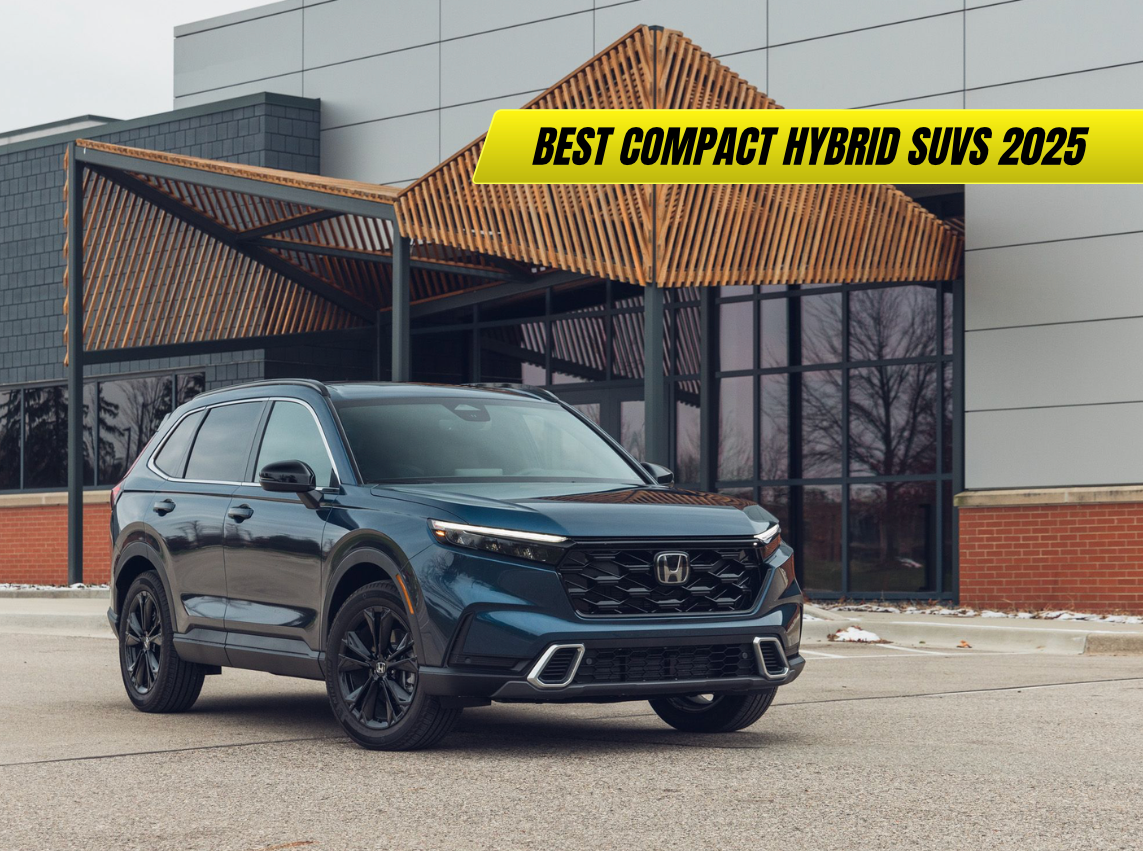
Compact hybrid SUVs for 2025: top picks for MPG, reliability, safety, and value—ranked for U.S. buyers with pricing, trims, and real-world advice.
Compact hybrid SUVs are the U.S. market’s practical sweet spot in 2025: easy to live with, efficient in mixed driving, roomy enough for families, and typically cheaper to insure than larger SUVs. If you want one vehicle that can handle commuting, Costco runs, and road trips without guzzling fuel, this is the category that keeps making the most sense.
Below is a data-driven ranking of the best compact hybrid SUVs you can actually buy in the United States right now, plus what to watch for in trims, pricing, and day-to-day ownership.
- Best all-around compact hybrid SUV: Toyota RAV4 Hybrid
- Best for long-term ownership: Honda CR-V Hybrid
- Best value with lots of space: Hyundai Tucson Hybrid
- Best MPG-focused pick (compact-ish): Kia Sportage Hybrid (especially FWD)
- Best “premium without luxury-tax” choice: Toyota Venza (if you can find one)
- Best for features per dollar: Kia Sportage Hybrid / Hyundai Tucson Hybrid (depending on deals)
How I Ranked These Compact Hybrid SUVs
To keep this ranking useful for U.S. buyers (not just spec-sheet warriors), I prioritized:
- Real-world efficiency: EPA MPG is the baseline, but I also weigh how these do on highways vs city driving using EPA context and owner patterns on FuelEconomy.gov.
- Availability and trims: If a model is technically great but hard to buy at MSRP, it gets dinged.
- Total cost of ownership: insurance, tires, brakes, and resale value matter as much as MPG.
- Safety and driver assists: verified via NHTSA resources and standard equipment.
- Everyday usability: rear-seat comfort, cargo, controls, visibility, and ride quality.
If you’re still deciding between categories, it helps to compare this list with broader roundups like our guide to the best hybrid SUVs and compact cars for U.S. drivers and price brackets like SUVs under $40,000 and SUVs under $50,000.
2025 Ranking: Best Compact Hybrid SUVs in the U.S.
Here’s the quick ranking table first, then I’ll break down “who should buy what.”
| Rank | Model | Why It Ranks Here | Best For |
|---|---|---|---|
| 1 | Toyota RAV4 Hybrid | Best balance of MPG, AWD, resale, reliability | Most buyers |
| 2 | Honda CR-V Hybrid | Comfort + long-term ownership confidence | Keep-it-forever owners |
| 3 | Kia Sportage Hybrid | Strong MPG (esp. FWD) + features-per-dollar | Value shoppers |
| 4 | Hyundai Tucson Hybrid | Big cabin + tech + warranty value | Families on a budget |
| 5 | Toyota Venza | Quiet, refined, efficient (if available) | Near-luxury feel |
| 6 | Ford Escape Hybrid | Easygoing efficiency; often discounted | Highway commuters |
| 7 | Subaru Forester Hybrid (if/when widely available) | AWD + safety focus | Snow-state drivers |
| 8 | Mazda CX-50 Hybrid | More engaging drive, Toyota-based hybrid system | Drivers who care about feel |
| 9 | Lexus NX 350h | Premium compact hybrid with strong MPG | Entry luxury |
| 10 | Jeep Compass e-Hybrid (not U.S.) | Not sold in the U.S. | Consider alternatives below |
Important availability note: If a hybrid model is not sold in the U.S., it doesn’t belong in a U.S. ranking as a “buy.” That’s why anything like a Compass “e-Hybrid” is treated as not applicable, and I’ll suggest real U.S. alternatives in the dedicated section below.
The Best Compact Hybrid SUV for Each Type of Buyer
If you don’t want to overthink it, start here.
Best all-around: Toyota RAV4 Hybrid
In my experience, the RAV4 Hybrid is the most “no regrets” pick. It’s efficient, AWD-capable, easy to resell, and has a huge U.S. service footprint. If you want one hybrid SUV that just works, this is it.
Best for comfort and long ownership: Honda CR-V Hybrid
From what I’ve seen, CR-V owners keep their vehicles longer than average—and the hybrid version fits that pattern. It’s calm, spacious, and especially strong if your daily life involves lots of highway miles and adult-sized rear passengers.
Best value/features: Kia Sportage Hybrid and Hyundai Tucson Hybrid
If you’re shopping payments, these two often win. Depending on incentives and regional supply, one of them will usually give you more tech and more space for the money than the Japanese leaders.
Best “quiet premium” without luxury prices: Toyota Venza
The Venza is the sleeper pick: smoother and quieter than many rivals. If you find one priced reasonably, it’s a great near-luxury hybrid SUV without stepping up to Lexus.
Deep Dives: What Makes the Top Picks Stand Out
1) Toyota RAV4 Hybrid: the benchmark
Why it wins: The RAV4 Hybrid nails the fundamentals—efficiency, AWD traction, predictable reliability, and strong resale. It’s also easy to insure compared to higher-performance SUVs.
What to watch: Some trims and special editions can drop MPG and push pricing up. If you care about maximum efficiency, avoid paying extra for appearance packages that add weight and rolling resistance.
I would recommend checking official trim details and packaging on the manufacturer site to avoid dealer confusion—start with Toyota’s official site and match the trim to your priorities before you negotiate.
2) Honda CR-V Hybrid: the comfort pick
Why it ranks #2: This is the compact hybrid SUV I’d point to if your priority is ride comfort, interior usability, and low-stress ownership.
Real-world tip: If you drive mostly highway, pay attention to tire choice and trim. Some wheel/tire packages prioritize looks over ride comfort and can cost you money at replacement time.
For safety research, I recommend using the official vehicle lookup tools at NHTSA.gov to confirm ratings and available driver-assist features by model year.
3) Kia Sportage Hybrid: the efficiency/value swing
Why it’s here: Sportage Hybrid can deliver excellent MPG (especially in certain configurations) and often includes features you’d pay more for elsewhere.
What to watch: AWD can reduce MPG, and availability varies by region. If your winters are mild, FWD is often the smarter efficiency play.
“For more information about the Sportage’s fuel economy, visit the EPA’s website.”
That simple guidance is worth following: validate your exact trim on FuelEconomy.gov before you buy, because MPG can change by drivetrain and wheel size.
4) Hyundai Tucson Hybrid: the space-and-tech deal
Why it’s strong: Tucson Hybrid tends to feel bigger inside than its footprint suggests. If your family uses rear seats daily, this one deserves a test drive.
Real-world tip: If you’re financing, Hyundai dealers sometimes bundle rate promos with certain trims. It can be cheaper overall to buy a slightly higher trim if the APR is meaningfully better.
Trims, Pricing, and Deal Strategy for U.S. Buyers
Compact hybrids can vary wildly in transaction price even within the same model.
What usually changes most by trim:
- Wheel size (can affect MPG and tire replacement cost)
- Driver-assist packaging and camera systems
- Seat material, power seats, heated/ventilated options
- Infotainment upgrades and audio
- Roof rails/panoramic roof weight (small MPG hit, sometimes)
Negotiation reality check (no sugarcoating):
- If a dealer wants “market adjustment” on a mainstream hybrid, shop another dealer.
- Consider expanding your search radius—compact hybrids are common enough that a 100–250 mile search can save thousands.
- If you’re cross-shopping price caps, start with the baseline economics in our SUVs under $40,000 list, then compare what the hybrid premium buys you in fuel savings and resale.
Ownership Reality: MPG, Insurance, Maintenance, and Incentives
Hybrid SUVs don’t just save fuel—they often reduce certain wear costs.
MPG and fuel costs:
Use the EPA calculators and annual fuel cost tools on FuelEconomy.gov. In mixed driving, the difference between a strong hybrid and a typical gas compact SUV can be hundreds of dollars per year—sometimes more if you drive a lot.
Insurance:
In general, compact hybrids can be cheaper to insure than EVs and performance SUVs, but trims with larger wheels, higher replacement-cost bumpers, or more expensive headlights can raise premiums. Ask for a quote before you sign.
Maintenance:
Hybrids can reduce brake wear thanks to regenerative braking. Tire cost is often the surprise—bigger wheels can mean significantly more expensive replacements.
Incentives:
Most conventional hybrids don’t qualify for federal EV credits (those are generally for EVs and some PHEVs). That’s why it’s important to evaluate the hybrid not as an “incentive play,” but as a total cost and usability play—especially if you’re financing.
Not Sold in the U.S.? Here Are the Closest Alternatives
Some “global market” hybrid SUVs get mentioned online but aren’t available in America.
If a model you’re reading about isn’t sold here, I’d recommend these U.S.-available alternatives:
- Want a compact, efficiency-first hybrid? Look at RAV4 Hybrid or Sportage Hybrid.
- Want premium compact hybrid feel? Consider Toyota Venza or Lexus NX 350h.
- Want AWD confidence in harsh weather? Consider RAV4 Hybrid (or a Subaru hybrid option if your local availability is strong).
FAQ
What is the best compact hybrid SUV overall in 2025?
The Toyota RAV4 Hybrid remains the best all-around choice for most U.S. buyers, balancing MPG, AWD availability, resale value, and reliability.
Which compact hybrid SUV is best for long highway commutes?
From what I’ve seen, the Honda CR-V Hybrid is one of the most comfortable options for highway-heavy driving and long-distance ownership.
Do compact hybrids qualify for federal tax credits?
Most standard hybrids do not qualify. Use FuelEconomy.gov for official efficiency data, and verify incentives through official IRS guidance if you’re considering plug-in models.
Are hybrid SUVs more expensive to maintain?
Not usually. Many hybrids have lower brake wear due to regenerative braking, but watch tire cost—larger wheels can be expensive.
Is AWD worth it on a compact hybrid SUV?
If you live in snow states or deal with frequent rain and steep driveways, yes. If you’re mostly urban/highway in mild climates, FWD can be the smarter efficiency/value choice.
Which compact hybrid SUV is best for families?
The Hyundai Tucson Hybrid and Honda CR-V Hybrid tend to offer strong rear-seat comfort and family-friendly cabins in this class.
Conclusion
Compact hybrid SUVs are where the U.S. market’s “best compromise” turns into “best decision” in 2025. The RAV4 Hybrid is the safest all-around pick, the CR-V Hybrid is the comfort-and-ownership champ, and the Sportage/Tucson hybrids are often the value winners when incentives and inventory line up.
In my experience, if you’re financing and planning to keep the vehicle for several years, the right compact hybrid SUV is one of the easiest ways to reduce running costs without giving up the flexibility that makes SUVs popular in the first place. If you want a simple rule: start with the RAV4 Hybrid, then only deviate if your comfort priorities (CR-V) or deal pricing (Sportage/Tucson) make the numbers obviously better.