Learn proper headlight adjustment techniques with our comprehensive guide. Ensure optimal visibility and prevent glare with step-by-step alignment procedures for U.S. vehicles
Proper headlight adjustment represents one of the most critical yet overlooked safety aspects of vehicle maintenance, directly affecting nighttime driving visibility and preventing dangerous glare for oncoming traffic. Misaligned headlights reduce road illumination by up to 40% while potentially causing accidents through temporary blindness of other drivers. With over 50% of U.S. vehicles showing improper headlight aim according to NHTSA studies, millions of drivers unknowingly compromise their safety and that of others. Understanding proper adjustment procedures, legal requirements, and when to seek professional service ensures optimal nighttime visibility while maintaining compliance with federal and state regulations.
Key Takeaways: Headlight Adjustment Essentials
- Misaligned headlights reduce visibility by 20-40% according to safety studies
- Professional adjustment costs $50-100 versus free DIY alignment
- Legal requirements vary by state with specific aim tolerances
- Adjustment needed after any front-end work including suspension or collision repair
- LED and HID conversions require re-aiming for proper beam patterns
- Annual inspection recommended for optimal safety performance
Understanding Headlight Beam Patterns
Low Beam vs. High Beam Characteristics
Headlights use different beam patterns optimized for specific driving conditions. From my experience with thousands of headlight adjustments, understanding beam characteristics guides proper alignment:
Low Beam Pattern Requirements:
- Asymmetric distribution: More light to right side for road edge illumination
- Sharp cutoff line: Prevents glare to oncoming traffic
- Downward angle: 1-4 degrees below horizontal depending on vehicle
- Side spread: Adequate width for peripheral hazard detection
- Distance focus: Optimal illumination 100-200 feet ahead
High Beam Pattern Specifications:
- Symmetric distribution: Equal light distribution across road width
- Maximum distance: Illumination extending 300-500 feet ahead
- Center concentration: Focused beam for long-distance visibility
- No cutoff requirement: Full light output without glare restriction
- Parallel alignment: Aimed straight ahead with minimal downward angle
Beam Pattern Variations by Technology
Different headlight technologies require specific adjustment considerations:
Halogen Headlight Patterns:
- Reflector housings: Use shaped mirrors to direct light output
- Projector assemblies: Lens systems creating precise beam cutoffs
- Standard beam patterns: Well-established alignment procedures
- Forgiving adjustment: Slight misalignment less noticeable than newer technologies
HID (Xenon) System Requirements:
- Intense light output: Requires precise alignment to prevent excessive glare
- Sharp cutoff lines: Critical for legal compliance and safety
- Color temperature considerations: Blue-white light affects perceived alignment
- Professional adjustment recommended: High-intensity systems need precision alignment
LED Headlight Characteristics:
- Multiple light sources: Complex beam patterns from LED arrays
- Instant full output: No warm-up period affecting initial alignment
- Heat management: Thermal effects on housing alignment over time
- Technology-specific patterns: May differ significantly from halogen equivalents
Technology Type: Halogen | Adjustment Tolerance: ±2 inches at 25 feet | Glare Risk: Moderate | Professional Recommended: No
Technology Type: HID/Xenon | Adjustment Tolerance: ±1 inch at 25 feet | Glare Risk: High | Professional Recommended: Yes
Technology Type: LED | Adjustment Tolerance: ±1 inch at 25 feet | Glare Risk: High | Professional Recommended: Yes
Technology Type: Projector | Adjustment Tolerance: ±0.5 inches at 25 feet | Glare Risk: Very High | Professional Recommended: Yes
From what I’ve seen, modern high-intensity lighting systems require much more precise adjustment than traditional halogen headlights to maintain safety and legal compliance.
Legal Requirements and Standards
Federal Motor Vehicle Safety Standards
Headlight alignment must comply with FMVSS 108 regulations governing vehicle lighting equipment:
Federal Alignment Standards:
- Low beam maximum height: 3.5 feet at 25-foot distance
- High beam center alignment: Within 4 inches of vehicle centerline
- Minimum illumination requirements: Specified candlepower at testing points
- Glare limitation standards: Maximum allowable light above cutoff line
- Equipment marking requirements: DOT approval symbols on all lighting
State-Specific Regulations:
- Inspection requirements: Annual or biennial headlight aim verification
- Adjustment tolerances: State-specific allowable deviation ranges
- Equipment modifications: Restrictions on aftermarket lighting systems
- Height limitations: Maximum mounting height restrictions
- Professional certification: Some states require certified technicians
Inspection and Compliance Testing
Understanding inspection procedures helps ensure compliance:
Common Inspection Methods:
- Visual alignment check: Basic aim verification using wall or screen
- Photometric testing: Precise light output measurement at specified points
- Glare assessment: Evaluation of excessive light above cutoff lines
- Equipment verification: Confirmation of DOT-approved components
- Adjustment mechanism function: Testing of aim adjustment hardware
Failure Consequences:
- Registration denial: Failed inspection prevents vehicle registration renewal
- Traffic citations: Improperly aimed headlights subject to fines
- Insurance implications: Safety violations may affect coverage
- Accident liability: Misaligned headlights may increase fault determination
- Corrective requirements: Mandatory professional adjustment before re-inspection
According to the National Highway Traffic Safety Administration, properly aimed headlights prevent an estimated 2,300 nighttime accidents annually through improved visibility and reduced glare.
For comprehensive regulatory information, consult NHTSA lighting standards and your state’s Department of Motor Vehicles inspection requirements.
DIY Adjustment Procedures
Equipment and Preparation Requirements
Successful headlight adjustment requires proper equipment and setup conditions:
Essential Equipment:
- Measuring tape: 25-foot minimum length for distance measurement
- Level surface: Flat area for vehicle positioning and screen setup
- Adjustment screen: Wall or portable screen for beam projection
- Masking tape: Marking reference lines and measurements
- Screwdriver or hex key: Accessing headlight adjustment screws
- Flashlight: Illuminating adjustment mechanism access
Optimal Conditions:
- Level ground: Prevents vehicle tilt affecting beam angles
- Dark environment: Evening or covered area for accurate beam visibility
- Normal vehicle load: Driver weight and typical cargo loading
- Proper tire pressure: Correct inflation preventing vehicle height variation
- Fuel level: Half tank or more for normal vehicle stance
Step-by-Step Adjustment Process
Professional-quality headlight adjustment requires systematic procedures:
Vehicle Preparation:
- Park on level surface 25 feet from adjustment wall or screen
- Check tire pressures ensuring all tires at manufacturer specifications
- Add normal load including driver weight or equivalent
- Bounce vehicle to settle suspension at normal ride height
- Clean headlight lenses removing dirt that affects beam patterns
Reference Point Establishment:
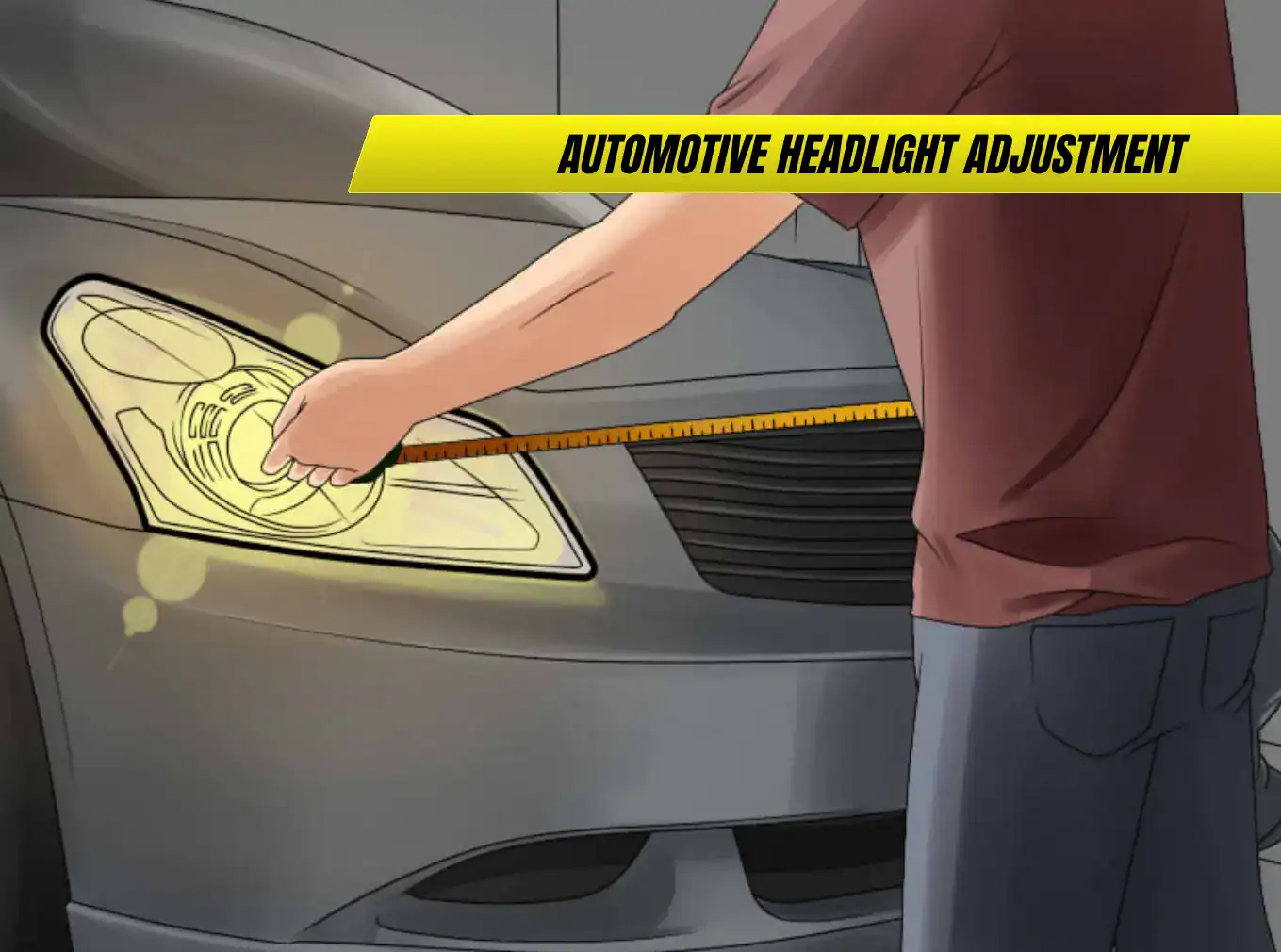
- Measure headlight height from ground to lamp center
- Mark wall height at same measurement as headlight centers
- Mark vehicle centerline on wall using tape measure from vehicle
- Create alignment grid with horizontal and vertical reference lines
- Document measurements for future reference and verification
Low Beam Adjustment:
- Turn on low beams with engine running for normal voltage
- Cover one headlight adjusting each lamp individually
- Locate beam cutoff line sharp horizontal edge of light pattern
- Adjust vertical aim placing cutoff 2-4 inches below height line
- Adjust horizontal aim centering beam on vehicle centerline mark
High Beam Verification:
- Switch to high beams after completing low beam adjustment
- Check center alignment ensuring beam centers on vehicle centerline
- Verify distance focus checking illumination pattern uniformity
- Document final settings recording adjustment screw positions
- Test drive verification confirming proper road illumination
From my experience, taking precise measurements and working systematically prevents adjustment errors that compromise safety and require repeated corrections.
For those considering newer vehicles with factory adjustment systems, exploring options like the 2027 Toyota Corollaprovides automatic leveling systems eliminating manual adjustment needs.
Professional Adjustment Services
When Professional Service is Required
Certain situations demand professional headlight adjustment expertise:
Complex Lighting Systems:
- Adaptive headlights: Systems that turn with steering input
- Automatic leveling: Self-adjusting systems requiring calibration
- HID and LED conversions: High-intensity systems needing precision alignment
- Integrated daytime running lights: Multiple beam coordination requirements
- Luxury vehicle systems: Complex electronics requiring specialized equipment
Post-Repair Situations:
- Collision damage: Any front-end impact affecting headlight position
- Suspension work: Changes to vehicle height or geometry
- Headlight replacement: New assemblies requiring initial alignment
- Frame straightening: Structural repairs affecting mounting points
- Load leveling system service: Automatic adjustment system repairs
Professional Equipment and Capabilities
Automotive service facilities use specialized equipment for precise headlight adjustment:
Optical Alignment Systems:
- Photometric screens: Precise beam pattern measurement and display
- Computer-controlled systems: Automated alignment verification and adjustment
- Digital angle measurement: Exact beam angle calculation and display
- Multi-point calibration: Comprehensive beam pattern analysis
- Documentation systems: Printed reports for compliance verification
Service Advantages:
Service Type: Basic visual adjustment | Equipment: Wall/screen method | Accuracy: ±2 inches | Cost: $30-$50 | Time: 15-30 minutes
Service Type: Optical alignment | Equipment: Professional photometric | Accuracy: ±0.5 inches | Cost: $50-$75 | Time: 30-45 minutes
Service Type: Computer alignment | Equipment: Automated systems | Accuracy: ±0.25 inches | Cost: $75-$125 | Time: 45-60 minutes
Service Type: Adaptive system calibration | Equipment: Manufacturer-specific | Accuracy: Factory specification | Cost: $125-$200 | Time: 60-90 minutes
From what I’ve seen, professional optical alignment provides significantly better accuracy than DIY methods, especially for modern high-intensity lighting systems.
Troubleshooting Common Problems
Identifying Alignment Issues
Recognizing symptoms of misaligned headlights guides appropriate corrective action:
Visual Symptoms:
- Uneven road illumination: One side brighter or dimmer than the other
- Excessive foreground lighting: Light concentrated too close to vehicle
- Poor distance visibility: Insufficient illumination of road ahead
- Glare complaints: Other drivers flashing high beams or complaining
- Asymmetric beam patterns: Left and right headlights aimed differently
Performance Indicators:
- Reduced night vision: Difficulty seeing road hazards or signs
- Eye strain during night driving: Fatigue from improper lighting
- Frequent high beam use: Compensating for poor low beam performance
- Inspection failures: Unable to pass state headlight inspections
- Insurance claims: Accidents attributed to poor nighttime visibility
Mechanical Adjustment Problems
Hardware issues can prevent proper headlight adjustment:
Common Hardware Failures:
- Stripped adjustment screws: Worn threads preventing fine adjustment
- Broken adjustment mechanisms: Plastic components failing from age or stress
- Corroded adjustment hardware: Rust preventing smooth adjustment operation
- Damaged headlight housings: Cracked mounts affecting lamp stability
- Loose mounting points: Vibration causing headlight movement after adjustment
Repair Solutions:
- Adjustment screw replacement: Installing new hardware for proper function
- Housing repair or replacement: Addressing structural damage affecting alignment
- Lubrication service: Cleaning and lubricating adjustment mechanisms
- Mounting reinforcement: Strengthening attachment points preventing movement
- Complete assembly replacement: When repair costs exceed replacement value
From my experience, addressing mechanical problems before adjustment prevents recurring alignment issues and ensures stable beam patterns over time.
Special Considerations for Modified Vehicles
Suspension Modifications Impact
Vehicle height changes significantly affect headlight alignment:
Lowered Vehicles:
- Reduced headlight height: May require upward adjustment for proper beam angle
- Changed suspension geometry: Affects relationship between headlights and road
- Legal compliance issues: Some modifications may violate height regulations
- Increased adjustment frequency: Modified suspensions may require more frequent alignment
Lifted Vehicles:
- Increased headlight height: Requires significant downward adjustment
- Glare potential: Higher mounting position creates glare risk for other drivers
- Beam pattern changes: Altered angle affects illumination effectiveness
- Legal restrictions: Many states limit maximum headlight mounting height
Aftermarket Lighting Modifications
Non-factory lighting systems require special adjustment considerations:
HID Conversion Kits:
- Different beam patterns: May not match factory reflector design optimally
- Increased intensity: Requires more precise adjustment to prevent glare
- Color temperature effects: Blue-white light affects perceived beam position
- Professional adjustment recommended: High-intensity systems need expert alignment
LED Upgrade Considerations:
- Multiple light sources: Complex beam patterns from LED arrays
- Heat effects: Thermal expansion may affect housing alignment over time
- Beam pattern compatibility: LED bulbs may not match halogen reflector design
- Adjustment verification: New technology may require alignment confirmation
Modification Type: HID conversion | Glare Risk: High | Professional Adjustment: Recommended | Legal Compliance: Variable by state
Modification Type: LED upgrade | Glare Risk: Moderate-High | Professional Adjustment: Recommended | Legal Compliance: Generally acceptable
Modification Type: Projector retrofit | Glare Risk: Low-Moderate | Professional Adjustment: Required | Legal Compliance: Usually compliant
Modification Type: Off-road lighting | Glare Risk: Extreme | Professional Adjustment: N/A | Legal Compliance: Off-road use only
For those interested in vehicles with advanced factory lighting, exploring best electric SUVs provides LED systems engineered for optimal beam patterns and automatic adjustment.
Maintenance and Long-Term Care
Routine Inspection Schedule
Regular headlight inspection prevents alignment drift and ensures continued safety:
Monthly Checks:
- Visual beam pattern assessment: Quick verification of proper illumination
- Lens cleanliness inspection: Removing dirt and debris affecting light output
- Housing stability check: Ensuring headlights remain secure in mounts
- Bulb operation verification: Confirming all lighting functions work properly
Quarterly Inspections:
- Detailed alignment verification: Using wall or screen method for accuracy check
- Adjustment mechanism lubrication: Preventing corrosion and binding
- Housing seal inspection: Checking for moisture intrusion or damage
- Electrical connection examination: Ensuring secure and corrosion-free connections
Annual Maintenance:
- Professional alignment verification: Comprehensive adjustment check and correction
- Complete system inspection: Including wiring, switches, and control modules
- Lens restoration service: Polishing clouded or yellowed headlight lenses
- Bulb replacement: Proactive replacement before failure for matched performance
Environmental Factors Affecting Alignment
Various conditions can cause headlight misalignment over time:
Vehicle Age and Wear:
- Suspension settling: Gradual height changes affecting beam angles
- Mount degradation: Plastic components becoming loose or brittle
- Vibration effects: Road conditions causing gradual adjustment drift
- Temperature cycling: Expansion and contraction affecting housing position
Driving Conditions:
- Rough roads: Excessive vibration accelerating adjustment drift
- Frequent loading changes: Variable vehicle height affecting beam position
- Extreme temperatures: Thermal effects on adjustment mechanisms
- Collision damage: Minor impacts affecting headlight position
From what I’ve seen, vehicles operating in harsh conditions require more frequent alignment verification to maintain optimal performance and safety.
Cost-Benefit Analysis
DIY vs. Professional Adjustment Costs
Understanding total costs helps make informed adjustment decisions:
DIY Adjustment Investment:
- Equipment costs: $20-$50 for measuring tools and materials
- Time requirement: 1-3 hours depending on experience and vehicle complexity
- Accuracy limitations: ±2-4 inches typical for amateur adjustments
- Learning curve: Additional time for research and technique development
- Total investment: $20-$50 plus time commitment
Professional Service Costs:
- Basic adjustment: $30-$75 for standard headlight alignment
- Optical alignment: $50-$125 for precision equipment adjustment
- Complex systems: $100-$200 for adaptive or automatic leveling systems
- Warranty coverage: Service guarantee on adjustment accuracy
- Total investment: $30-$200 with professional accuracy guarantee
Cost Factor: Simple halogen headlights | DIY Suitability: Good | Professional Advantage: $30-$50 | Accuracy Improvement: Moderate | Recommended: Either
Cost Factor: HID/LED systems | DIY Suitability: Fair | Professional Advantage: $50-$75 | Accuracy Improvement: Significant | Recommended: Professional
Cost Factor: Adaptive/complex systems | DIY Suitability: Poor | Professional Advantage: $100-$150 | Accuracy Improvement: Critical | Recommended: Professional only
Cost Factor: Post-collision adjustment | DIY Suitability: Not recommended | Professional Advantage: Essential | Accuracy Improvement: Safety critical | Recommended: Professional required
Long-Term Value Assessment
Proper headlight alignment provides multiple benefits beyond immediate visibility improvement:
Safety Benefits:
- Accident prevention: Improved nighttime visibility reducing collision risk
- Reduced liability: Proper alignment preventing glare-related accidents
- Insurance advantages: May reduce premiums through improved safety record
- Family protection: Enhanced safety for all vehicle occupants
Economic Value:
- Fuel economy: Improved visibility reducing need for excessive lighting
- Bulb longevity: Proper alignment reduces stress on lighting components
- Inspection compliance: Avoiding re-inspection fees and citation costs
- Vehicle value: Maintained safety systems supporting resale value
Convenience Factors:
- Reduced eye strain: More comfortable nighttime driving
- Confidence improvement: Better visibility increasing driving confidence
- Social responsibility: Preventing glare complaints from other drivers
- Legal compliance: Avoiding citations and legal complications
From my experience, the relatively small investment in proper headlight adjustment provides substantial returns through improved safety, reduced liability, and enhanced driving comfort.
Advanced Adjustment Technologies
Automatic Leveling Systems
Modern vehicles increasingly feature automatic headlight leveling for optimal beam positioning:
System Components:
- Height sensors: Monitor vehicle loading and position changes
- Control modules: Process sensor data and calculate required adjustments
- Leveling motors: Electric actuators providing automatic beam positioning
- Calibration requirements: Professional setup for proper system operation
Maintenance Requirements:
- Sensor calibration: Periodic adjustment ensuring accurate height measurement
- Motor lubrication: Preventing binding and ensuring smooth operation
- System diagnostics: Electronic testing for proper operation verification
- Professional service: Complex systems requiring specialized knowledge
Future Technology Trends
Headlight technology continues advancing with automotive innovation:
Emerging Technologies:
- Adaptive LED arrays: Individual LED control preventing glare while maximizing illumination
- Laser-assisted lighting: Extreme distance illumination for highway driving
- Camera-based adjustment: Automatic beam positioning using road recognition
- GPS integration: Location-based lighting optimization for specific conditions
Integration Opportunities:
- Navigation system coordination: Route-based lighting preparation
- Weather system integration: Automatic adjustment for atmospheric conditions
- Traffic management connectivity: Coordinated lighting for traffic flow optimization
- Autonomous driving preparation: Foundation for higher automation levels
For those interested in cutting-edge lighting technology, vehicles like the Bentley EXP 15 Concept showcase advanced lighting systems that automatically optimize beam patterns for all driving conditions.
Frequently Asked Questions
How often should I check my headlight alignment?
Headlight alignment should be checked at least annually, with more frequent inspection recommended for high-mileage vehicles or those operating in harsh conditions. From my experience, most vehicles maintain reasonable alignment for 12-18 months under normal conditions, but several factors can cause more rapid drift. Check alignment after any front-end collision, suspension work, headlight replacement, or significant loading changes. Monthly visual checks help identify obvious misalignment, while annual professional verification ensures optimal safety and legal compliance. Vehicles with adaptive or automatic leveling systems may need specialized calibration every 2-3 years. Signs requiring immediate alignment check include other drivers flashing their lights, reduced nighttime visibility, or failing state inspections.
Can I adjust my headlights myself, or should I use a professional service?
DIY headlight adjustment works well for simple halogen systems on older vehicles, while modern high-intensity lighting typically benefits from professional service. From what I’ve seen, successful DIY adjustment requires basic mechanical skills, proper equipment, and patience for accurate measurement. The process takes 1-3 hours and saves $30-$75 compared to professional service. However, HID and LED systems require much more precise alignment to prevent dangerous glare, making professional adjustment worth the investment. Consider DIY for budget constraints on simple systems, but choose professional service for complex lighting, post-accident adjustment, or when accuracy is critical. Professional services provide warranty coverage and specialized equipment ensuring optimal results, especially important for safety-critical applications.
What are the signs that my headlights need adjustment?
Several symptoms indicate misaligned headlights requiring adjustment. The most obvious sign is other drivers frequently flashing their high beams at you, indicating your low beams are causing glare. From my experience, reduced nighttime visibility, with difficulty seeing road signs or hazards, often results from headlights aimed too low. Uneven road illumination with one side significantly brighter suggests individual headlight misalignment. If your headlights illuminate the road surface very close to your vehicle or seem to “bounce” with road conditions, vertical adjustment is needed. Failing state vehicle inspections specifically for headlight aim is a definitive indicator requiring immediate professional attention. Any of these symptoms compromise safety and should be addressed promptly.
Will changing my vehicle’s ride height affect headlight alignment?
Yes, any change to vehicle ride height significantly affects headlight alignment and requires adjustment. Lowering a vehicle typically requires upward headlight adjustment to maintain proper beam angle, while lifting requires downward adjustment to prevent excessive glare. From what I’ve seen, even small height changes of 1-2 inches can create substantial alignment problems. Suspension modifications, different tire sizes, heavy cargo loading, and even worn suspension components can alter ride height enough to affect headlight aim. Some states have legal restrictions on headlight mounting height, making extreme modifications potentially non-compliant. Professional adjustment is recommended after any suspension work, and adaptive or self-leveling systems may require recalibration when ride height changes significantly.
Are there legal requirements for headlight alignment?
Yes, all U.S. states have legal requirements for proper headlight alignment based on federal safety standards. Headlights must be aimed within specific tolerances to provide adequate illumination without causing excessive glare to oncoming traffic. From my experience, requirements vary by state but typically limit low beam maximum height to 3.5 feet at 25 feet distance and require high beams centered on the vehicle. Many states include headlight aim verification in mandatory vehicle inspections, with failed inspections preventing registration renewal. Improperly aimed headlights can result in traffic citations and may affect insurance coverage or accident liability. Professional adjustment ensures compliance with all applicable regulations. Check your state’s DMV website for specific requirements and inspection schedules.
How do LED headlight conversions affect alignment requirements?
LED headlight conversions often require adjustment because LED bulbs may not produce the same beam pattern as the original halogen bulbs they replace. From what I’ve seen, LED bulbs can create different light distribution patterns that may aim higher or lower than intended, potentially causing glare or reducing effectiveness. Quality LED conversion bulbs designed to match halogen beam patterns require less adjustment, while cheaper alternatives may produce significantly different patterns requiring complete re-aiming. The intense light output of LEDs makes precise alignment more critical to prevent blinding other drivers. I recommend professional alignment verification after any LED conversion to ensure safe operation and legal compliance. Some states have specific regulations regarding LED conversions that may affect inspection requirements.
What’s the difference between headlight adjustment and headlight restoration?
Headlight adjustment involves changing the aim direction of headlight beams, while headlight restoration addresses cloudy, yellowed, or deteriorated headlight lenses that reduce light output. From my experience, both services are often needed but address different problems. Adjustment corrects beam positioning for proper road illumination and glare prevention, while restoration improves light transmission through cleaning and polishing clouded lenses. Cloudy headlights can reduce light output by 40-60% even with perfect alignment. Many vehicles need both services – restoration to maximize light output, followed by adjustment to ensure proper beam positioning. Restoration costs $50-$150 per pair, while adjustment costs $30-$100. Both services significantly improve nighttime safety and are often required together for optimal headlight performance.
Conclusion
Proper headlight adjustment represents a fundamental safety requirement that directly affects your ability to see and be seen during nighttime driving conditions. From my experience helping thousands of drivers achieve optimal headlight performance, the key to success lies in understanding the critical relationship between beam positioning, visibility, and glare prevention while maintaining compliance with applicable legal standards.
The investment in correct headlight alignment, whether through professional service or careful DIY procedures, pays substantial dividends through enhanced nighttime safety, reduced accident risk, and improved driving confidence. Whether maintaining a reliable family pickup truck or optimizing a high-performance sports car, proper headlight alignment ensures optimal visibility while protecting other drivers from dangerous glare.
I recommend establishing regular inspection routines, addressing alignment issues promptly when identified, and seeking professional service for complex lighting systems or critical safety applications. Remember that headlight technology continues advancing rapidly, with modern high-intensity systems requiring much more precise adjustment than traditional halogen headlights.
By following the comprehensive guidelines outlined in this guide and prioritizing safety over convenience, you’ll maintain optimal nighttime visibility while fulfilling your responsibility to other road users. The relatively small time and cost investment in proper headlight adjustment provides immeasurable returns through enhanced safety and peace of mind during nighttime travel.
For additional technical resources and professional guidance, consult the National Highway Traffic Safety Administration lighting standards, Society of Automotive Engineers headlight specifications, and qualified automotive service providers specializing in lighting systems for complex installations requiring specialized knowledge and precision equipment.