
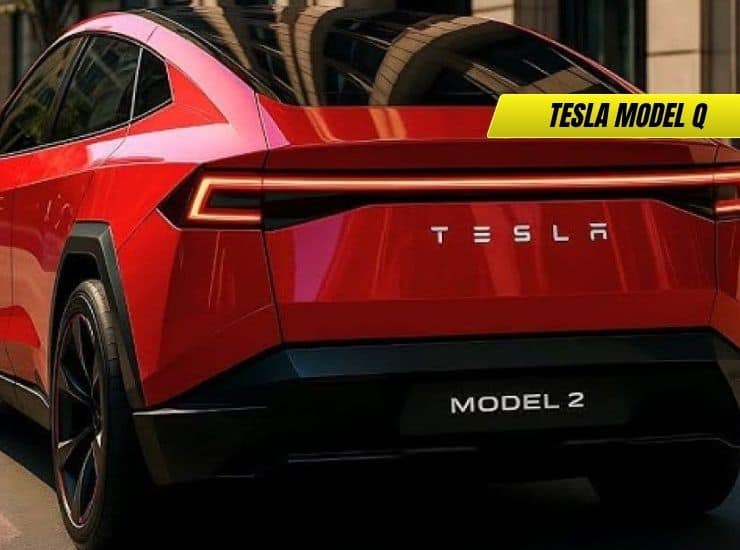
Tesla’s highly anticipated Model Q represents the company’s most ambitious attempt to democratize electric vehicle ownership, targeting a sub-$25,000 price point that could revolutionize the affordable EV market. Expected to arrive in US showrooms by late 2025 or early 2026, this compact electric vehicle promises to deliver Tesla’s signature technology, Supercharger network access, and Full Self-Driving capability at a price point that competes directly with mainstream gasoline vehicles. For American buyers seeking their first electric vehicle, the Model Q could eliminate the primary barriers of cost and range anxiety that have limited EV adoption.
Discover everything about Tesla’s upcoming Model Q including expected US pricing under $25,000, release timeline, range specifications, and how it will reshape the affordable electric vehicle market.
Key Highlights for US Tesla Buyers
• Breakthrough Pricing: Target starting price under $25,000 before federal tax credits in US market • Substantial Range: Expected 250-300 mile EPA rating eliminating range anxiety for most drivers • Supercharger Access: Full compatibility with Tesla’s extensive fast-charging network nationwide • Advanced Technology: Full Self-Driving capability and Tesla’s latest software features included • US Production: Manufacturing at Fremont and Texas Gigafactory ensuring domestic supply • Mass Market Appeal: Designed to compete directly with compact gasoline vehicles on total cost
Tesla Model Q Market Positioning and Strategy
Addressing the Affordable EV Gap
The Model Q targets the largest automotive segment that Tesla has never directly addressed: mainstream buyers seeking practical, affordable transportation. With most new vehicles in America selling between $20,000-35,000, Tesla’s current lineup prices out millions of potential customers who want electric technology but cannot justify premium pricing.
According to CarVira’s editorial team, the Model Q represents Tesla’s recognition that achieving their mission of accelerating sustainable transport requires vehicles accessible to middle-class American families. The company’s manufacturing maturity and vertical integration now enable cost structures that support mass-market pricing without compromising core Tesla values.
The timing coincides with increased competition from Chinese manufacturers and traditional automakers launching affordable EVs. Tesla’s brand strength, charging infrastructure, and technology integration provide competitive advantages that justify continued premium positioning even at lower price points.
Production Strategy and Cost Optimization
Tesla’s selection of Fremont and Texas Gigafactory production facilities leverages existing infrastructure while optimizing logistics for the US market. Domestic production eliminates import tariffs and shipping costs while supporting faster delivery times and reduced inventory requirements.
The company’s vertical integration strategy, including battery production, semiconductor manufacturing, and software development, creates cost advantages unavailable to traditional automakers dependent on supplier networks. These efficiencies enable competitive pricing while maintaining profit margins.
Economies of scale from Model Q production should benefit Tesla’s entire lineup through shared component costs and manufacturing expertise. The learning curve from affordable vehicle production may inform future Tesla models and manufacturing processes.
Expected Specifications and Performance
Range and Efficiency Analysis
Early estimates suggest the Model Q will achieve 250-300 miles of EPA-rated range, positioning it competitively against other affordable EVs while exceeding most drivers’ daily needs. This range eliminates “range anxiety” for typical American driving patterns while providing adequate capability for longer trips with Supercharger support.
Battery technology improvements and aerodynamic optimization contribute to efficiency gains that enable substantial range from relatively small battery packs. Tesla’s expertise in battery management and thermal systems ensures consistent performance across varied climate conditions.
Charging capabilities likely include both AC and DC fast charging, with Supercharger compatibility providing access to America’s most extensive and reliable fast-charging network. Home charging at Level 2 speeds should accommodate overnight charging for daily driving needs.
Technology Integration and Features
The Model Q will feature Tesla’s latest infotainment system with over-the-air update capabilities ensuring the vehicle improves throughout ownership. The minimalist interior design philosophy reduces complexity while maintaining functionality and reducing manufacturing costs.
Full Self-Driving capability availability at this price point represents unprecedented value in the automotive market. While regulatory approval continues evolving, the hardware capability provides future-proofing for autonomous driving features as they become available.
Smartphone integration, premium audio, and comprehensive connectivity features ensure the Model Q meets modern expectations for technology and convenience. Tesla’s software expertise creates user experiences that often exceed traditional automotive infotainment systems.
US Market Competitive Analysis
Direct Competition Assessment
The Model Q enters a rapidly expanding affordable EV segment that includes the Chevrolet Equinox EV, Nissan Leaf, and upcoming models from various manufacturers. However, Tesla’s charging infrastructure and brand recognition provide significant competitive advantages.
Traditional automakers face challenges matching Tesla’s vertical integration and software capabilities while maintaining competitive pricing. The Model Q’s technology features and charging access may justify slight price premiums over conventional alternatives.
Import competition from Chinese manufacturers creates pricing pressure, but quality concerns, service network limitations, and potential tariff issues provide Tesla with competitive protection in the US market.
Total Cost of Ownership Advantages
When federal tax credits up to $7,500 apply, the Model Q’s effective price could drop below $20,000, making it competitive with used vehicles and entry-level gasoline cars. This pricing transformation could accelerate EV adoption among price-sensitive buyers.
Operating cost advantages including reduced fuel expenses, minimal maintenance requirements, and potential insurance discounts create compelling total ownership economics. Many buyers may save $2,000-4,000 annually compared to equivalent gasoline vehicles.
State and local incentives in many areas provide additional cost reductions through rebates, HOV lane access, and reduced registration fees. These benefits compound the federal incentives to create substantial effective discounts.
Federal Tax Credit Eligibility and Incentives
IRA Compliance and Qualification
The Model Q’s domestic production and battery sourcing strategy aligns with Inflation Reduction Act requirements for federal tax credit eligibility. Tesla’s vertical integration and domestic supply chain development specifically addresses these regulatory requirements.
Income limits for tax credit eligibility ($150,000 for joint filers, $112,500 for head of household, $75,000 for individuals) encompass most potential Model Q buyers, ensuring broad access to the maximum $7,500 credit.
The $55,000 price cap for sedan/wagon tax credit eligibility provides substantial margin for the Model Q’s expected pricing, ensuring qualification even with option packages and potential price increases.
State and Local Incentive Stacking
California’s Clean Vehicle Rebate Program provides up to $2,000 additional incentives for qualifying buyers, potentially reducing effective Model Q costs below $15,000 when combined with federal credits.
State-specific programs in Colorado, Connecticut, and other states offer additional rebates ranging from $1,000-5,000 depending on income qualification and vehicle specifications. These programs stack with federal incentives for maximum savings.
Utility company rebates for EV purchases and home charging equipment installation provide additional cost reductions. Many utilities offer time-of-use rates that reduce electricity costs for overnight charging.
Manufacturing and Supply Chain Considerations
Domestic Production Benefits
US production eliminates import delays and reduces shipping costs while supporting American manufacturing jobs. Domestic supply chains provide greater control over quality and delivery timing compared to international sourcing.
The proximity of Texas Gigafactory to major US markets reduces transportation costs and delivery times. Regional distribution strategies enable efficient inventory management and customer delivery processes.
Trade policy independence through domestic production protects against tariff changes and international supply disruptions that could affect imported vehicles. This stability benefits both Tesla and consumers through predictable pricing.
Scalability and Volume Planning
Tesla’s manufacturing expertise and automated production systems enable rapid scaling to meet demand without compromising quality. The company’s experience with production ramp-up addresses previous challenges with new model launches.
Component sharing with existing Tesla models reduces complexity while leveraging economies of scale. Standardized parts and manufacturing processes minimize production costs and maintain quality consistency.
Supply chain partnerships for critical components ensure availability while maintaining cost targets. Tesla’s vertical integration strategy reduces dependency on external suppliers for key technologies.
Technology Features and Innovation
Autonomous Driving Capabilities
The Model Q’s inclusion of Full Self-Driving hardware represents unprecedented value in the affordable vehicle segment. While regulatory approval continues developing, the capability provides future-proofing for autonomous features as they become available.
Tesla’s neural network training from millions of vehicles creates competitive advantages in autonomous driving development. The Model Q benefits from this collective learning while contributing additional data to improve the system.
Over-the-air updates enable continuous improvement of autonomous capabilities without requiring hardware changes. This software-defined approach ensures the vehicle improves throughout ownership.
Connectivity and Software Integration
Tesla’s software expertise creates user experiences that rival consumer electronics rather than traditional automotive systems. Regular updates add features and improve performance throughout the vehicle’s life.
Smartphone integration and cloud connectivity enable remote vehicle monitoring, climate control, and security features. The Tesla mobile app provides comprehensive vehicle management from anywhere with cellular coverage.
Entertainment features including streaming services, gaming capabilities, and productivity applications transform the vehicle into a connected workspace during charging stops or waiting periods.
Insurance and Ownership Considerations
Insurance Cost Factors
Tesla’s advanced safety features often qualify for insurance discounts through reduced accident risk and claims frequency. Automatic emergency braking, collision avoidance, and comprehensive airbag systems contribute to favorable insurance ratings.
However, repair costs for Tesla vehicles may be higher than conventional cars due to specialized parts and service requirements. Tesla’s expanding service network and mobile service capabilities help address these concerns.
Some insurers offer specialized EV policies that account for unique characteristics and provide appropriate coverage for battery systems and charging equipment. Shopping for EV-experienced insurers may provide better rates and coverage.
Maintenance and Service Network
Electric vehicles require significantly less maintenance than gasoline cars due to fewer moving parts and no need for oil changes, transmission service, or engine maintenance. The Model Q should continue this advantage while maintaining Tesla’s service quality.
Tesla’s mobile service program brings many maintenance services directly to customers, reducing inconvenience and service costs. Expanding service center networks ensure local support availability.
Parts availability and service training for the Model Q benefit from Tesla’s established infrastructure and growing service network. The company’s direct sales model ensures consistent service standards across locations.
Market Impact and Industry Implications
EV Market Acceleration
The Model Q’s sub-$25,000 pricing could accelerate mainstream EV adoption by removing the primary barrier of high purchase costs. Industry analysts suggest this price point represents a tipping point for mass market acceptance.
Traditional automakers face increased pressure to develop competitive affordable EVs or risk losing market share to Tesla’s expanded lineup. The Model Q’s success could force industry-wide strategic shifts toward electrification.
Used car market impacts include potential value depreciation for gasoline vehicles as new EV alternatives become more affordable. This trend could accelerate the transition away from internal combustion engines.
Infrastructure Development
Increased EV adoption from affordable models like the Model Q drives demand for expanded charging infrastructure. Tesla’s Supercharger network benefits while public charging networks face pressure to improve reliability and coverage.
Grid planning and electricity generation must accommodate growing EV charging demand. However, smart charging systems and time-of-use rates help distribute load while potentially stabilizing electrical grids.
Workforce development in EV service and maintenance becomes increasingly important as electric vehicles gain market share. Training programs and certification standards need expansion to support growing EV populations.
Investment and Purchase Timing Considerations
Early Adoption Strategies
Initial Model Q production may be limited as Tesla ramps manufacturing and tests market demand. Early reservations likely provide priority delivery and potential access to launch-specific features or pricing.
However, early production vehicles sometimes experience quality issues that improve with manufacturing maturity. Conservative buyers may benefit from waiting 6-12 months after launch for production optimization.
Tax credit availability could change as Tesla’s cumulative sales approach program limits or if federal policies shift. Timing purchases to maximize incentive availability provides substantial savings opportunities.
Resale Value Projections
Tesla vehicles typically maintain strong resale values due to brand recognition, technology features, and charging network access. The Model Q’s affordable pricing may create different depreciation patterns compared to premium Tesla models.
However, rapid technology advancement and increasing competition could accelerate depreciation for early Model Q examples. Buyers should consider long-term ownership rather than short-term trading strategies.
The used EV market continues developing price stability as technology matures and supply increases. Model Q resale values will likely depend on battery health, software version, and overall market conditions.
According to CarVira’s editorial team, the Tesla Model Q represents a potential inflection point in American automotive history, where electric vehicles finally achieve price parity with gasoline alternatives while offering superior technology and lower operating costs. For US consumers, this vehicle could eliminate the primary barriers to EV adoption while providing access to Tesla’s ecosystem of charging, service, and software capabilities.
The Model Q’s success will largely determine whether Tesla achieves its mission of accelerating sustainable transport or if other manufacturers capture the affordable EV market. For American buyers, this represents an unprecedented opportunity to access cutting-edge automotive technology at mainstream pricing, potentially making the Model Q one of the most significant vehicle launches in recent automotive history.


